Planning an event in an art gallery space? Learn how rotating exhibitions, hybrid café-gallery concepts, and authentic artist partnerships create memorable experiences beyond traditional venues.
You’re not looking for another conference room with white walls. You want a space where the atmosphere does half the work—where guests walk in and immediately feel like they’re somewhere that matters. Art gallery venue rentals can deliver that, but not all gallery spaces are created equal. Some feel intimidating. Others charge you to hang or remove artwork. And plenty look great in photos but fall apart when you’re trying to serve drinks or set up seating.
The right gallery venue should make your event easier, not harder. It should give you a backdrop that sparks conversation without requiring a decorator’s budget or an art history degree. Whether you’re planning a corporate reception, an intimate celebration, or a creative workshop, here’s what actually matters when you’re evaluating gallery spaces in NYC—and why the hybrid café-gallery model might solve problems you didn’t know you had.
Gallery venues aren’t just rooms with art on the walls. The best ones are designed around how people experience visual work—which means they’ve already solved problems most event spaces ignore. Lighting is adjustable and directional. Sightlines are clear. The flow encourages movement and conversation rather than forcing everyone into rows.
Traditional event spaces give you a blank slate, which sounds flexible until you realize you’re paying someone to create atmosphere from scratch. Gallery spaces come with built-in visual interest. The art itself becomes part of your event, giving guests something to talk about beyond small talk. That’s valuable when you’re trying to create an experience people actually remember.
But there’s a catch. Many galleries operate primarily as exhibition spaces, which means they’re not set up for the practical realities of hosting events. You might not have access to a kitchen. Furniture might be limited. Sound systems could be nonexistent. And if the gallery is actively showing work, you’ll need to navigate rules about protecting the art, which can limit how you use the space.
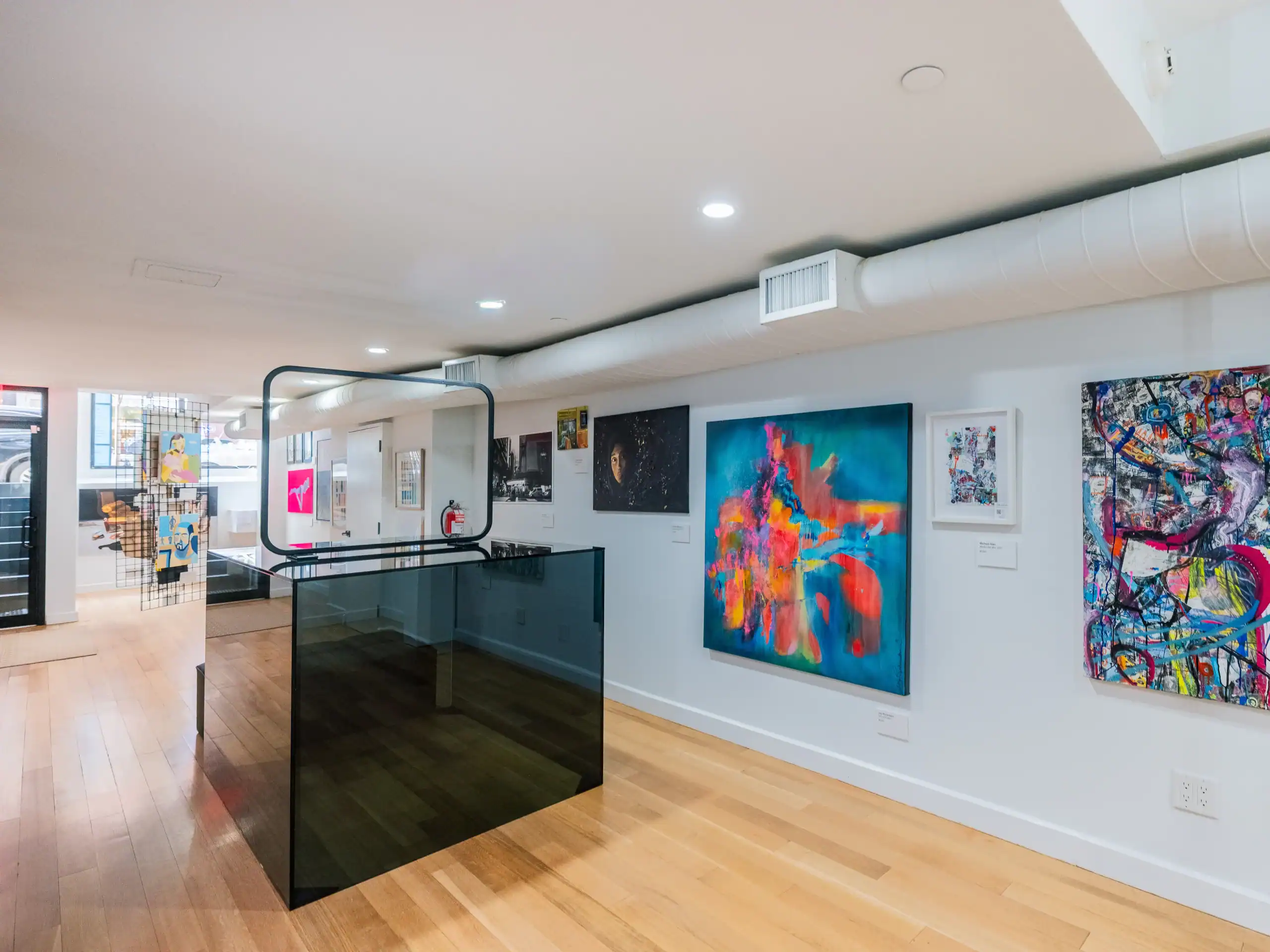
Traditional galleries prioritize the art. That’s their job. When you rent one for an event, you’re borrowing a space that wasn’t designed with your needs in mind. You’re working around the artwork, the lighting setup, the security requirements. Some galleries charge you to remove or rehang pieces. Others won’t let you move anything at all.
This works fine if you’re hosting an art-focused event where the exhibition is the point. But if you need a space that functions as both a cultural backdrop and a practical venue for serving food, seating guests, or facilitating conversation, traditional galleries can feel restrictive.
Hybrid café-gallery spaces flip that model. They’re built from the ground up to serve dual purposes—showcasing art while functioning as hospitality venues. Think of places where you can grab coffee while looking at work from local artists, where the furniture is comfortable and movable, where the layout encourages people to linger rather than move through quickly.
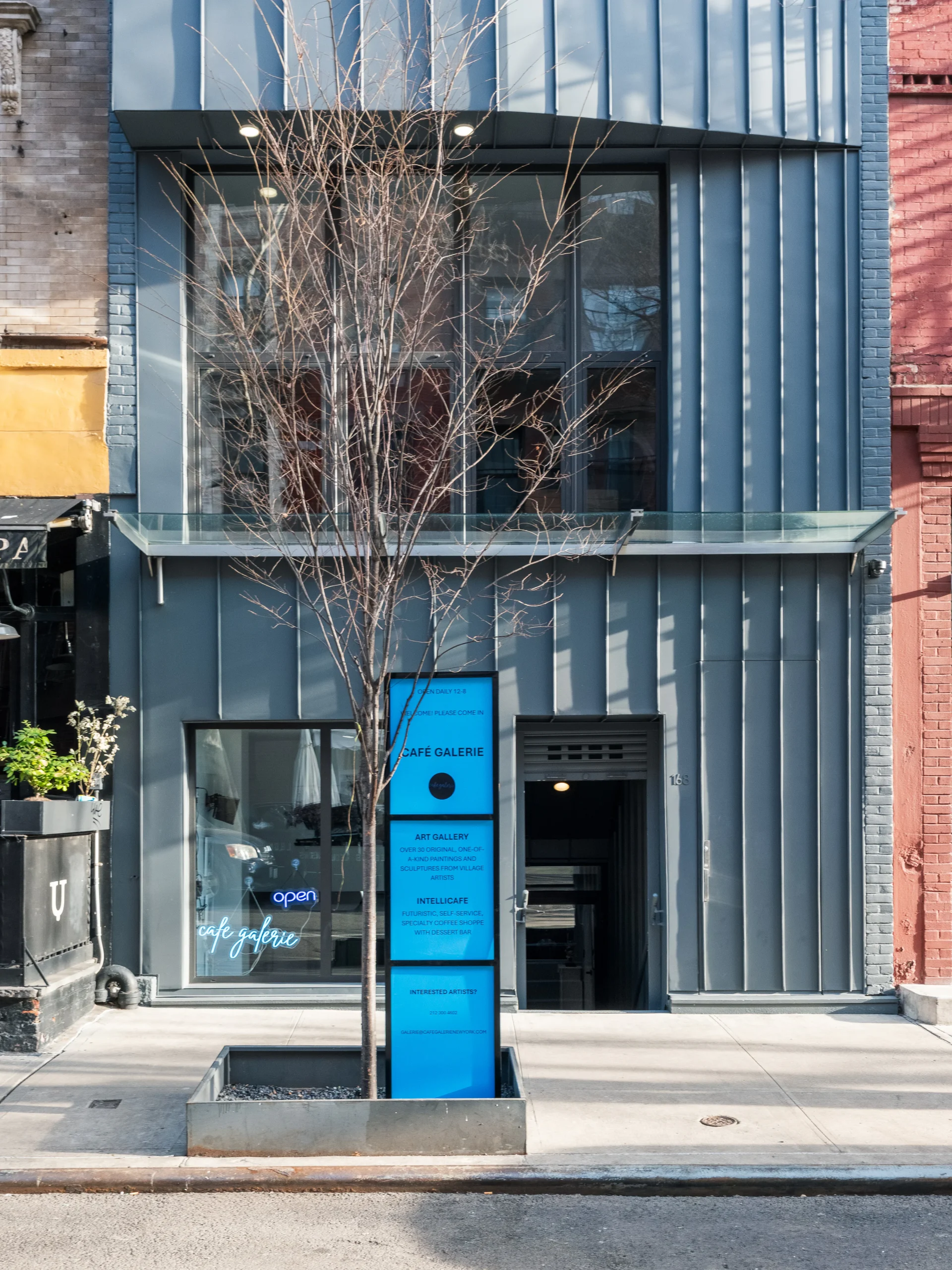
We operate on this model at The Café Galerie in Greenwich Village. We’re a working gallery with rotating exhibitions from NYC artists, but we’re also a café with self-serve coffee technology and seating designed for people to actually use the space. You’re not asking permission to move a chair or worried about someone bumping into a sculpture. The art is part of the environment, but the space is designed for people first.
This approach solves practical problems. You don’t need to hire separate catering because there’s already a café operation. You don’t need to rent furniture because the space has seating. You don’t need to create atmosphere because the rotating exhibitions do that work for you. And guests feel more comfortable because they’re in a space that’s designed to be approachable rather than precious.
The downside? You’re not getting a blank canvas. The aesthetic is already established. If you need complete control over every visual element, a traditional gallery or raw event space might serve you better. But if you want a space that feels complete without requiring a production budget, hybrid venues offer a middle ground that traditional galleries can’t match.
One of the biggest advantages of gallery venue rentals is that the backdrop changes. Unlike a hotel ballroom or conference center that looks the same every time, gallery spaces evolve with each new exhibition. This means your event automatically feels fresh and current, tied to what’s happening in the local art scene rather than generic.
Rotating exhibitions also give your event built-in talking points. Guests who might struggle with small talk suddenly have something concrete to discuss—a painting they’re drawn to, a sculpture they’re trying to figure out, an artist’s technique they find interesting. This is especially valuable for networking events or corporate gatherings where you’re trying to facilitate connections between people who don’t know each other.
When galleries partner directly with local artists, you’re not just getting decoration—you’re getting authentic work from people who are part of the community. That authenticity matters. It’s the difference between art that’s there because it looks nice and art that’s there because someone created it with intention. Guests can feel that difference, even if they can’t articulate why.
Some gallery venues, particularly hybrid café-gallery spaces, take this a step further by making the artists themselves available. At The Café Galerie, we often have artists present during exhibitions, creating opportunities for guests to meet the creators and learn about the work directly. This turns a passive viewing experience into an interactive one, which makes events more memorable.
There’s also a practical benefit: if guests connect with a piece, they can often purchase it. This is particularly appealing for corporate events where clients or employees might want to take home something meaningful, or for celebrations where art becomes part of the gift-giving experience. Traditional event venues can’t offer this—the décor is rented and goes back at the end of the night.
The key is finding venues where the art rotation is intentional and curated rather than random. You want exhibitions that reflect a point of view, that showcase emerging talent or established voices with something to say. Greenwich Village and SoHo have long histories of supporting working artists, which means gallery venues in these areas tend to have stronger curatorial programs and more authentic partnerships with the creative community.
Want live answers?
Connect with a The Café Galerie expert for fast, friendly support.
Location matters more for gallery venues than you might expect. A gallery in Chelsea attracts a different crowd than one in the Lower East Side or Greenwich Village. Each neighborhood has its own character, its own relationship to the art world, its own accessibility considerations.
Greenwich Village, where we’re located, has been a hub for visual arts since the 1850s. It’s not trying to be the next hot art district—it already has that history. This matters because it means the infrastructure is there: people know how to get there, there are restaurants and bars nearby for pre- or post-event activities, and the neighborhood itself adds to the experience.
Capacity is the next practical consideration. Most gallery event spaces comfortably accommodate between 30 and 75 people. Some can stretch to 100 or more, but once you’re past that point, you’re usually looking at larger venues that function more like event halls than intimate galleries. Think carefully about whether you need everyone in one room or if you’re okay with guests flowing between spaces.
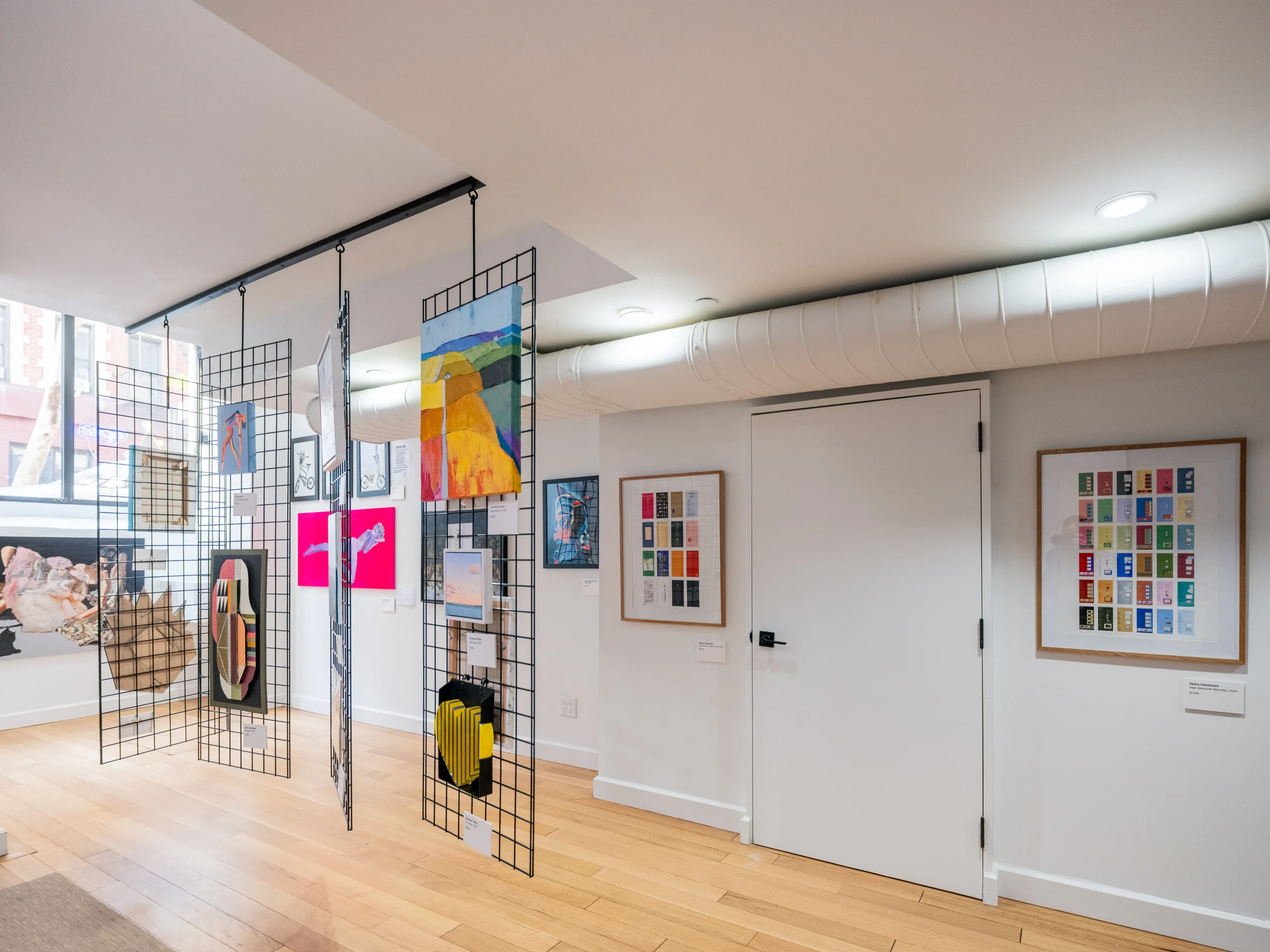
Gallery lighting is designed to make art look good, which usually means it’s better than what you’d find in a standard event space. But it also means the lighting is specific—focused on the walls, with adjustable spots for individual pieces. This works beautifully if your event involves people moving around and viewing work. It’s less ideal if you need consistent lighting for a seated dinner or presentation.
Ask about lighting flexibility before you book. Can the venue adjust the setup for your needs? Is there general ambient lighting in addition to the spotlights? If you’re planning any kind of presentation or performance, you’ll need to know whether the existing system can accommodate that or if you’ll need to bring in additional equipment.
Wall space is another consideration that’s easy to overlook. In a traditional gallery, the walls are the product—they’re where the value is. This means you usually can’t hang your own signage, decorations, or branding without careful coordination. Some venues are strict about this; others are more flexible, especially if they’re hybrid spaces designed to accommodate events.
Our model at The Café Galerie sidesteps some of these issues because the space is designed for dual use from the start. The art is protected but not precious—it’s meant to be experienced in a working café environment, which means we’ve already solved for how to keep artwork safe while people are eating, drinking, and moving around.
Artwork protection is a legitimate concern, particularly if you’re serving food or alcohol. Traditional galleries often require additional insurance, restrict where guests can stand with drinks, or charge you for any damage that occurs. This isn’t unreasonable—art is valuable and fragile—but it does add complexity and cost to your event planning.
Hybrid venues tend to display work that’s either more durable or positioned in ways that reduce risk. Paintings might be hung higher or behind barriers. Sculptures might be on pedestals that guests can view but not easily bump into. The layout itself is designed to protect the work without making guests feel like they’re walking through a museum where everything is off-limits.
If you’re considering a traditional gallery space, get clear answers about artwork liability before you sign anything. What’s your responsibility if something is damaged? Is insurance required, and if so, how much does it cost? Are there restrictions on where guests can go or what they can do? These aren’t dealbreakers, but they are factors that affect both your budget and your guests’ experience.
Greenwich Village and SoHo represent different eras of New York’s art scene, and that shows up in the types of gallery venues available in each neighborhood. SoHo was the hot art district in the 1970s and 80s—raw industrial spaces converted into galleries and artist lofts. Today, it’s more polished and expensive, with galleries that cater to collectors and tourists as much as to working artists.
Greenwich Village has a longer and deeper history with the arts. By the 1850s, it was already attracting art schools, private galleries, and artists’ studios. That foundation never really went away. Even as the neighborhood gentrified, it maintained connections to the creative community in ways that feel more organic than manufactured.
This matters when you’re choosing a venue because it affects the authenticity of the experience. A gallery in SoHo might have more name recognition, but a venue in Greenwich Village is more likely to have genuine partnerships with local artists and connections to the neighborhood’s creative infrastructure. You’re not just renting a space—you’re tapping into a community.
Thompson Street, where we’re located, sits in the heart of this cultural landscape. It’s accessible via multiple subway lines, surrounded by other cultural venues, and part of a neighborhood that people actually want to visit. This makes logistics easier—guests know how to get there, there are parking options nearby, and the area itself adds to the appeal of your event.
The distinction between authentic local artist partnerships and generic art displays is worth paying attention to. Some venues fill their walls with whatever looks good, treating art as decoration rather than as work with context and meaning. Others, particularly hybrid café-gallery spaces with curatorial programs, are intentional about who they showcase and why.
When a venue has real relationships with artists—when the work is for sale, when the artists are present, when there’s a story behind each exhibition—that authenticity comes through. Guests can feel the difference between a space that cares about art and a space that’s using art as wallpaper. This is especially important if you’re trying to create an experience that feels meaningful rather than just visually appealing.
The trade-off is that authentic partnerships mean less control over what’s on the walls. You can’t request specific colors or styles to match your event theme. The art is what it is, curated by someone with a point of view. For some event planners, that’s a limitation. For others, it’s a feature—one less thing to worry about, and a guarantee that the space will feel complete without additional decoration.
Art gallery venue rentals work when the space solves problems rather than creating them. You want a location that’s accessible, a layout that fits your event format, and an atmosphere that does half the work of making your gathering feel special. Whether that means a traditional gallery with museum-quality exhibitions or a hybrid café-gallery space where guests can grab coffee while viewing local artists’ work depends on what you’re trying to accomplish.
The best gallery venues understand that events need flexibility. They’ve figured out how to protect artwork while still letting people move freely. They’ve solved for lighting, seating, and flow. And they’ve built relationships with artists that make the space feel authentic rather than staged.
If you’re exploring options in Greenwich Village or SoHo, look for venues that balance cultural credibility with practical functionality. We offer one approach to this at The Café Galerie—a working gallery that’s also designed as a hospitality space, with rotating exhibitions from NYC artists and the infrastructure to actually host events without requiring you to coordinate ten different vendors. It’s worth seeing what a hybrid model makes possible when you’re ready to move beyond traditional event spaces.
Summary:
Share: