NYC's local art spaces are evolving beyond coffee shops into authentic community hubs where specialty brews meet rotating art exhibitions, creating third places that respect your time and spark genuine connection.
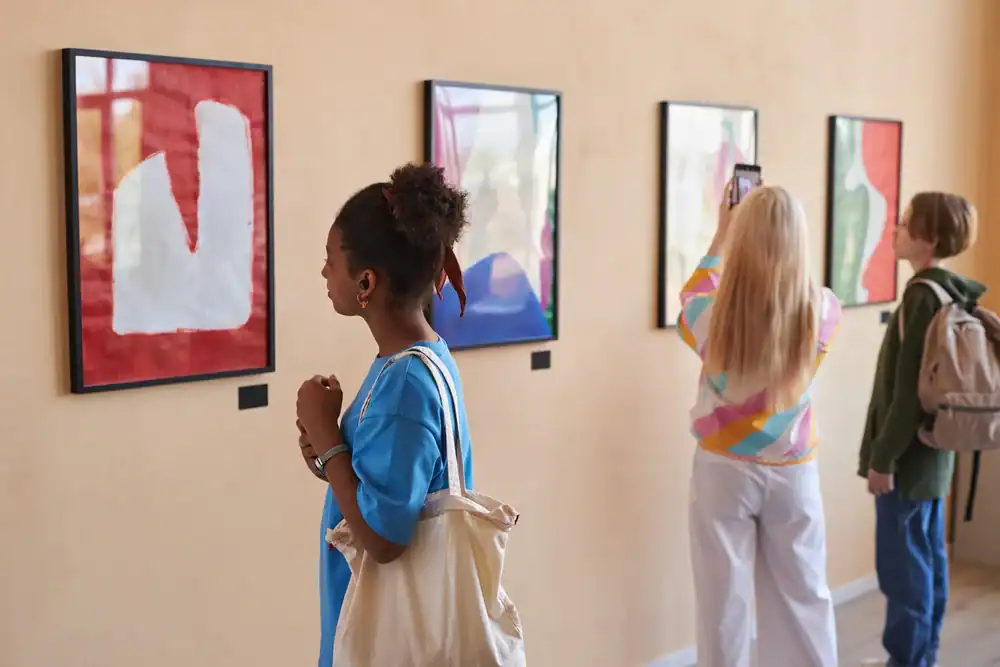
The difference isn’t just about hanging a few prints on the wall and calling it a gallery. Real local art spaces operate from a fundamentally different philosophy. We’re designed as third places—social environments that exist outside your home and office where you can simply be.
In NYC, where over 4,200 independent coffee shops now compete for attention, the ones thriving aren’t trying to be everything to everyone. We’re carving out intentional identities. The hybrid art-and-coffee model works because it removes barriers on both sides. You’re not obligated to understand contemporary art theory to appreciate what’s on the wall, and you’re not just another transaction in the barista’s queue.
Think about the last time you walked into a traditional art gallery. There’s pressure. You’re supposed to know things, appreciate context, maybe even make a purchase. But add coffee to the equation and suddenly you’re there for a legitimate reason that has nothing to do with art expertise. The art becomes a bonus discovery, not a test you might fail. This accessibility is what transforms a coffee shop into something more—a genuine community gathering space.
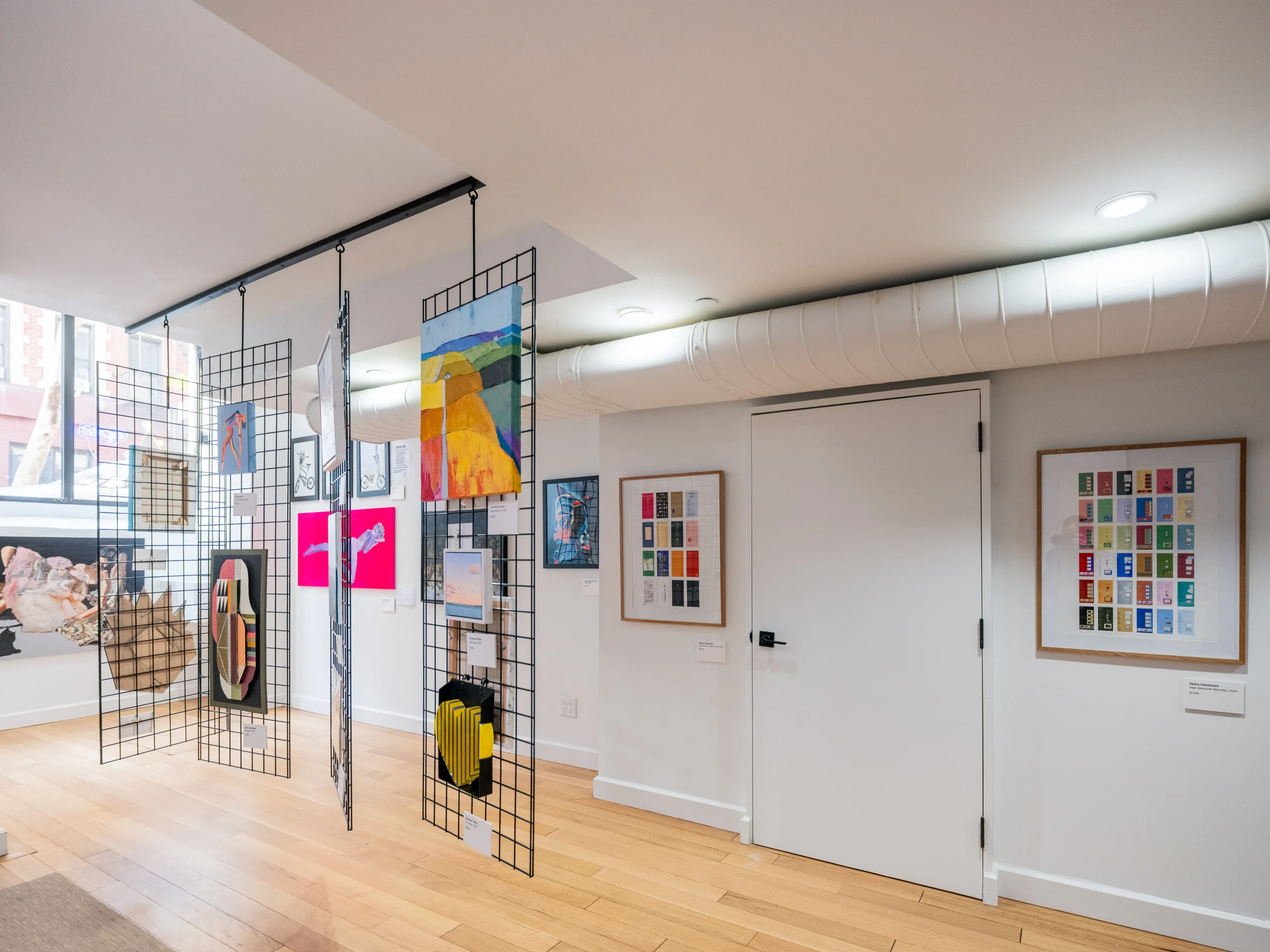
New Yorkers drink 6.7 times more coffee than people in any other US city. That’s not just a fun statistic—it’s a window into how coffee functions here. It’s fuel, ritual, and social currency all at once. When you pair that cultural reality with visual art, something interesting happens.
Local art spaces become gathering points where multiple needs get met simultaneously. Remote workers find reliable Wi-Fi and decent seating. Artists gain exposure to hundreds of daily visitors who’d never set foot in a Chelsea gallery. Neighbors discover a spot where they’re recognized, where the space feels designed for humans rather than optimized for throughput.
The coffee itself matters more than you might think. Specialty coffee—the kind sourced transparently, roasted with precision, and served by people who actually care—signals that the space values quality over convenience. It’s the same philosophy that drives the art curation. Both elements say: we’re not cutting corners, we’re not rushing you, and we’re not treating you like you’re interchangeable.
This is where the “authentic community hub” label becomes more than marketing speak. When $68 of every $100 spent at independent shops stays in the local economy (compared to $43 at chains), you’re participating in a different kind of exchange. Your morning latte funds the artist whose work you’re admiring. It pays the rent that keeps this third place available when you need somewhere to exist between obligations.
The physical design reinforces this intention. Human-centric spaces prioritize comfort and flow over cramming in maximum seats. Lighting is intentional. Acoustics are considered. The art isn’t just decoration—it’s conversation starter, inspiration source, and proof that the neighborhood has creative talent worth celebrating. You might come in for an oat milk latte and leave having learned about an artist whose opening is next week. Or you might just sit with your laptop and let the visual environment stimulate your brain in ways that beige walls never could.
What’s emerging is a model where coffee and art aren’t competing for attention—they’re collaborating to create an experience that respects your time, your taste, and your intelligence. The space becomes essential to your routine not because you’re addicted to caffeine (though let’s be honest, you probably are), but because it’s one of the few places in this city where you can actually breathe.
The concept of “third places” isn’t new. Sociologist Ray Oldenburg defined them decades ago as social spaces beyond home and work where community life unfolds. What’s new is how desperately NYC needs them right now.
Consider what’s changed. Remote work means 69% of New York organizations now use hybrid models, with employees in central offices only 57% of the time. People are unmoored from traditional workplace social structures but still crave human connection. Home is no longer purely private space—it’s also your office, your gym, your everything. The boundaries have blurred to the point where having a third place isn’t a luxury. It’s a psychological necessity.
Yet in a city where every square foot is monetized and optimized, genuine third places are vanishing. The bar that used to host open mics is now a bank. The bookstore with the cozy reading nook is now luxury condos. What remains often feels transactional—come in, buy something, leave. There’s no room to just exist.
Local art spaces are filling this void, and the numbers prove people are responding. Independent coffee shops are growing at 3.2% annually, outpacing Starbucks’ domestic growth. Consumers are actively choosing neighborhood spots over corporate chains. They’re voting with their wallets for spaces that feel human, that recognize them, that don’t rush them out the door the second they finish their drink.
The art component amplifies the third place function. Gallery walls that rotate monthly give regulars a reason to pay attention, to return, to bring friends. “Have you seen the new exhibition?” becomes a conversation starter. The space develops a rhythm—not just the daily flow of morning rush and afternoon lull, but a longer arc of artistic seasons that mark time in ways that matter to the community.
This matters especially for artists. Gallery rents in NYC are astronomical. Getting your work seen traditionally requires connections, money, or both. But when a coffee shop offers wall space to local creators, it democratizes the entire process. Suddenly your art is in front of hundreds of people daily—people who might not have walked into a traditional gallery but will absolutely notice a striking piece while waiting for their cortado.
The symbiosis runs deep. The space gets an ever-changing visual identity that keeps things fresh. Artists get exposure and potential sales. And you? You get an environment that stimulates your brain instead of numbing it. You get proof that your neighborhood has creative talent. You get a reason to put your phone down and look at something made by human hands.
Third places have historically served as precursors of democracy—17th century English coffeehouses were called “Penny Universities” because they enabled intellectual exchange with no financial barriers. They were political arenas where ideas could be debated freely. That function hasn’t disappeared. It’s just evolved. Today’s local art spaces serve the same purpose: they’re where neighbors discuss neighborhood issues, where freelancers collaborate on projects, where activists plan community initiatives, where strangers become friends over shared appreciation for a painting.
In 2026, as NYC continues to navigate hybrid work, rising costs, and social fragmentation, these spaces aren’t just nice to have. They’re infrastructure. They’re the connective tissue that keeps neighborhoods from becoming just collections of isolated apartments. They’re where community actually happens, one conversation and one cup of coffee at a time.
Want live answers?
Connect with a The Café Galerie expert for fast, friendly support.
Walk into a traditional art gallery and there’s a certain atmosphere. Quiet. Serious. Someone at a desk who might or might not acknowledge you. White walls. Track lighting. An unspoken expectation that you should know what you’re looking at and why it matters.
For a lot of people, that’s intimidating as hell. You’re not sure if you’re allowed to take photos. You don’t know if asking “how much is this?” makes you look clueless. The whole experience can feel like a test you didn’t study for.
Now contrast that with encountering art while you’re picking up your morning coffee. There’s no pressure. You’re there for a legitimate reason that has nothing to do with art knowledge. The coffee removes the barrier. You can look or not look. You can ask questions or just enjoy your drink. The art becomes accessible in a way that gallery spaces, for all their good intentions, often aren’t. This is what makes the art gallery experience in a coffee shop fundamentally different—and more democratic.
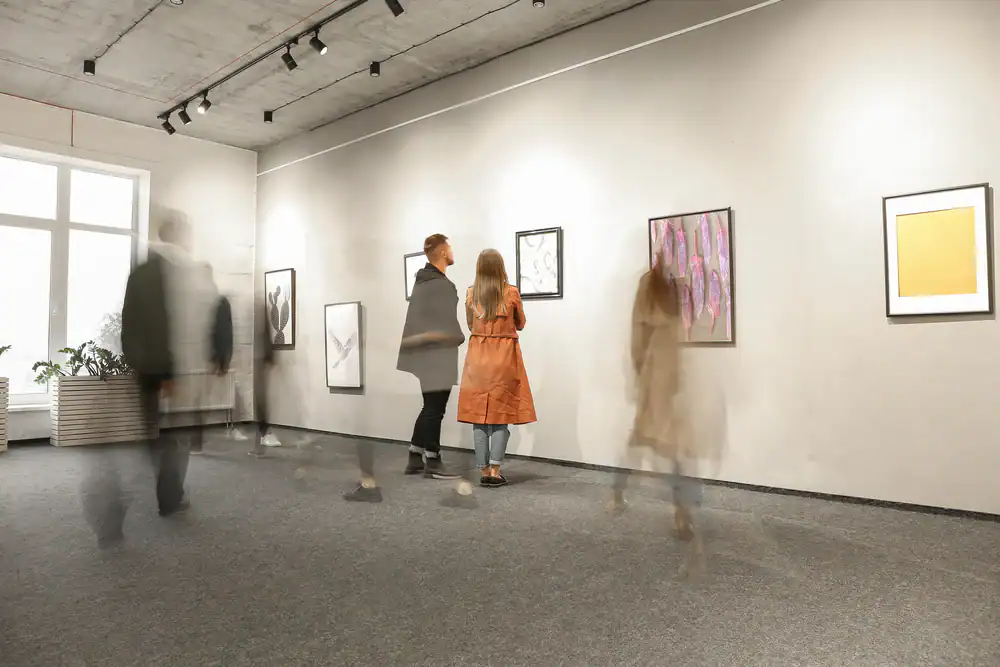
For emerging and mid-career artists, the traditional gallery system can feel like an impossible wall to scale. You need representation, which requires connections. You need a body of work, which requires time and money. You need to fit into whatever aesthetic the gallery is currently promoting. It’s a gatekeeping system, whether intentionally or not.
Coffee shop gallery walls operate differently. The barrier to entry is lower, which means more diverse voices get heard. An artist who wouldn’t get a second look from a Chelsea gallery might find an enthusiastic audience among the neighborhood regulars at a local cafe. The work gets seen by hundreds of people weekly—not art collectors necessarily, but real people living real lives who might genuinely connect with what they’re seeing.
There’s also an immediacy to the feedback. In a traditional gallery, you might never know who looked at your work or what they thought. In a coffee shop, you might be sitting there when someone stops in front of your painting and pulls out their phone to photograph it. You might overhear conversations about your work. You might get approached directly by someone interested in commissioning a piece.
The financial model tends to be more artist-friendly too. Many coffee shops operate on commission rather than the traditional gallery split, and some don’t take any percentage at all—they’re just happy to have rotating art that enhances the space. For artists, this means more money per sale and more control over pricing.
Beyond the practical benefits, there’s something psychologically valuable about having your work exist in a space where people are relaxed and receptive. Gallery-goers are often in evaluation mode—judging, comparing, deciding if something is “good.” Coffee shop visitors are in a different headspace. They’re more open, less critical, more likely to respond emotionally rather than intellectually. That can lead to more genuine connections between artwork and viewer.
The rotating exhibition model also creates momentum. If you’re showing for a month or two, there’s built-in urgency. People know the work won’t be there forever, which creates a reason to engage now rather than later. And if a show goes well, the artist builds a track record that can open doors to other opportunities—including, potentially, traditional gallery representation down the line.
“Human-centric design” sounds like consultant jargon, but in practice it’s pretty straightforward: does this space make people feel good, or does it make them feel like they’re in the way?
Start with the basics. Seating that’s actually comfortable, not just aesthetically minimal. Tables at heights that work for laptops and coffee cups simultaneously. Lighting that’s warm enough to feel welcoming but bright enough to work by. Acoustics that allow conversation without forcing you to shout. These aren’t revolutionary concepts. They’re just rarely prioritized in spaces optimized for throughput rather than dwell time.
Human-centric design also means thinking about flow. Can you tell instinctively where to stand to order? Where to wait for your drink? Where to add cream and sugar? Is there a logical place to bus your dishes, or are you left awkwardly holding a dirty cup while scanning for somewhere to put it? Small frictions add up. A well-designed space removes them before you even notice they could exist.
Then there’s the visual environment. Art on the walls serves multiple functions. It gives your eyes somewhere to rest that isn’t a screen. It signals that this space values aesthetics and creativity. It provides conversation starters and moments of unexpected delight. It makes the space feel curated rather than generic, intentional rather than accidental.
The coffee itself is part of the design. When we’re serving specialty-grade beans roasted with care, we’re making a statement about quality standards. We’re saying: we don’t cut corners on the things that matter. That philosophy extends to everything else—the pastries, the service, the way the space is maintained. It’s holistic.
Music matters too. The wrong playlist can ruin an otherwise perfect space. Too loud and you can’t think. Too quiet and every conversation feels like you’re eavesdropping. The right volume and vibe create a sonic backdrop that enhances rather than intrudes. Some spaces get this right instinctively. Others never figure it out.
Human-centric design also means considering who’s not in the room. Is the space accessible to people with mobility issues? Are there options for people with dietary restrictions? Do your prices exclude anyone who’d otherwise want to be here? These questions don’t have easy answers, but spaces that ask them tend to feel more genuinely welcoming than those that don’t.
Ultimately, human-centric design is about respecting the people who walk through your door. It’s about recognizing that they’re not just customers or transactions—they’re neighbors, community members, humans who deserve spaces that make them feel seen and valued. When you get it right, people respond. They become regulars. They bring friends. They tell stories about your space. They make it part of their routine, not because they have to, but because they genuinely want to.
The future of local art spaces isn’t about choosing between coffee and art, between commerce and culture, between efficiency and experience. It’s about creating environments where all of those things coexist naturally, where the boundaries blur in ways that benefit everyone involved.
What we’re seeing emerge in NYC is a model that works—for artists who need exposure, for neighborhoods that need gathering spaces, for individuals who need somewhere to exist between home and work. The numbers back it up. Independent coffee shops are outgrowing chains. Consumers are choosing local. Money is staying in communities rather than flowing to distant corporate headquarters.
But beyond the economics, there’s something more fundamental happening. In a city that often feels designed to move you along, to extract value and send you on your way, local art spaces are creating pockets of resistance. We’re saying: slow down, look around, notice things, connect with the people next to you. That’s not a business strategy. That’s a statement about what kind of city we want to live in.
If you’re looking for a space that actually respects your time and intelligence, that stimulates rather than numbs, that feels like it was designed for humans rather than optimized for profit—we invite you to experience what happens when coffee and art collaborate instead of compete. Come see how we’re building community, one cup and one conversation at a time.
Summary:
Share: