NYC's remote workers are ditching cramped apartments for inspiring coffee shops where art meets productivity—and the results speak for themselves.

An inspiring coffee shop isn’t about exposed brick and Edison bulbs. It’s about what happens to your brain when you walk through the door.
The environment you work in directly impacts how you think, how long you can focus, and whether you’ll actually finish what you started. Researchers have documented something called the “coffee shop effect”—remote workers consistently report increased focus and productivity in cafes compared to home offices. The background noise, the presence of other people working, even the act of getting dressed and leaving your apartment all contribute to a mental shift that makes work feel less like a slog.
But here’s what most coffee shops miss: inspiration isn’t just about avoiding distractions. It’s about creating the conditions where ideas actually happen. That’s where art comes in—not as decoration, but as fuel for the kind of thinking that moves your work forward.
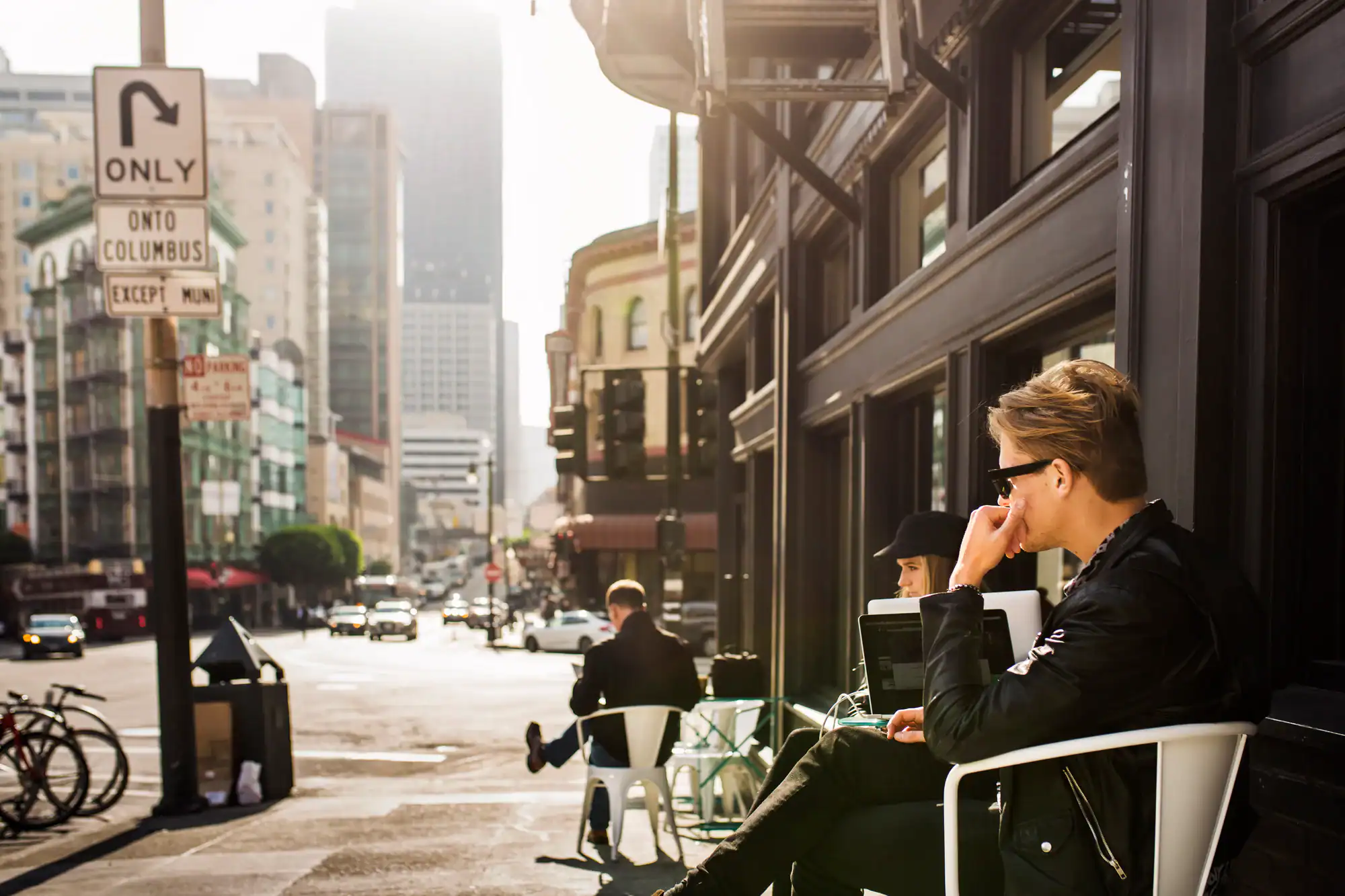
If you’re working remotely in NYC, your apartment probably wasn’t designed for eight hours of focused work. The isolation hits harder than people admit—especially when you’re surrounded by millions of people but spend your days talking to a screen.
The numbers back this up. Nearly one in five remote employees globally report feeling lonely at work, with fully remote workers the most affected. That loneliness isn’t just uncomfortable—it kills productivity. Research shows that employees with strong workplace connections are significantly more engaged, more productive, and less likely to quit.
Working from a coffee shop solves multiple problems at once. You’re around other people without the pressure of forced interaction. You have a reason to shower and put on real clothes. You’re physically separating work from home, which helps your brain understand when it’s time to focus and when it’s time to be off the clock.
The atmosphere matters more than you’d think. About a third of people who work from coffee shops say they do it specifically to be around other people. Another 27% report that it directly improves their productivity. When you’re sitting in your apartment for the third straight day, those percentages start making a lot of sense.
Then there’s the creative boost. Low-level ambient noise—the kind you get in a busy cafe—actually makes it harder for your brain to process information in the usual way. That sounds bad until you realize it prompts more abstract thinking and creative problem-solving. Your brain works differently when it’s not in the same environment where you sleep, eat, and watch TV.
NYC apartments are expensive and small. Your roommate has Zoom calls. Your neighbor practices drums. Your WiFi cuts out during important meetings. A laptop-friendly cafe with reliable internet, decent coffee, and a community of people who get it? That’s not a luxury—it’s a practical solution to a real problem.
Most coffee shops give you four walls, some chairs, and hopefully decent WiFi. We built something different because we kept asking a simple question: what if your workspace actually inspired you?
Art isn’t background decoration here. Our rotating exhibitions change every six to eight weeks, which means the space itself evolves. You’re not staring at the same print of the Brooklyn Bridge every single day. You’re seeing work from local artists who are actually creating things—which has a way of reminding you that you’re supposed to be creating things too.
This matters more than it sounds like it should. When you’re deep in the weeds of client emails or debugging code or writing the same paragraph for the fourth time, visual breaks matter. Looking up from your laptop to see actual artwork—something someone made with intention and care—resets your brain in a way that scrolling Instagram absolutely does not.
The art cafe concept has been growing across NYC since the pandemic. People craved community and creative spaces after being cooped up for months. But most art cafes focus on the art experience first, with work happening as an afterthought. We flipped that. This is a workspace for people who need to get things done, where art enhances the experience instead of competing with it.
You’re not paying gallery prices. You’re not navigating pretentious attitudes about who belongs in art spaces. You’re getting coffee, opening your laptop, and working in an environment that was designed with your actual needs in mind. The art is there because it makes the work better—not as a gimmick, but as a fundamental part of how the space functions.
Local artists benefit too. They get exposure to professionals with disposable income who actually spend time with their work instead of walking past it in three minutes. Several pieces have found homes with customers who discovered them during a Tuesday afternoon work session. That’s the kind of organic connection that doesn’t happen when art is locked away in traditional gallery spaces.
Want live answers?
Connect with a The Café Galerie expert for fast, friendly support.
You can find lists of laptop-friendly cafes all over the internet. Most of them tell you the same things: this place has WiFi, that place has outlets, this other place has good lighting. All true, all important, and all missing the point.
The best WFH spots in NYC aren’t just checking boxes. They’re solving the actual problems remote workers face every day. You need reliable internet—that’s a given. But you also need a place that doesn’t make you feel guilty for staying past your second coffee. A place where the noise level helps instead of hurts. A place that understands you’re not just killing time between meetings—you’re actually trying to build something.
The difference between a good coffee shop and a great workspace comes down to whether the place was designed for people like you. Some cafes actively discourage laptop users. They remove WiFi passwords or limit seating or give you the side-eye after an hour. Others welcome you but don’t really think about what makes remote work actually work.
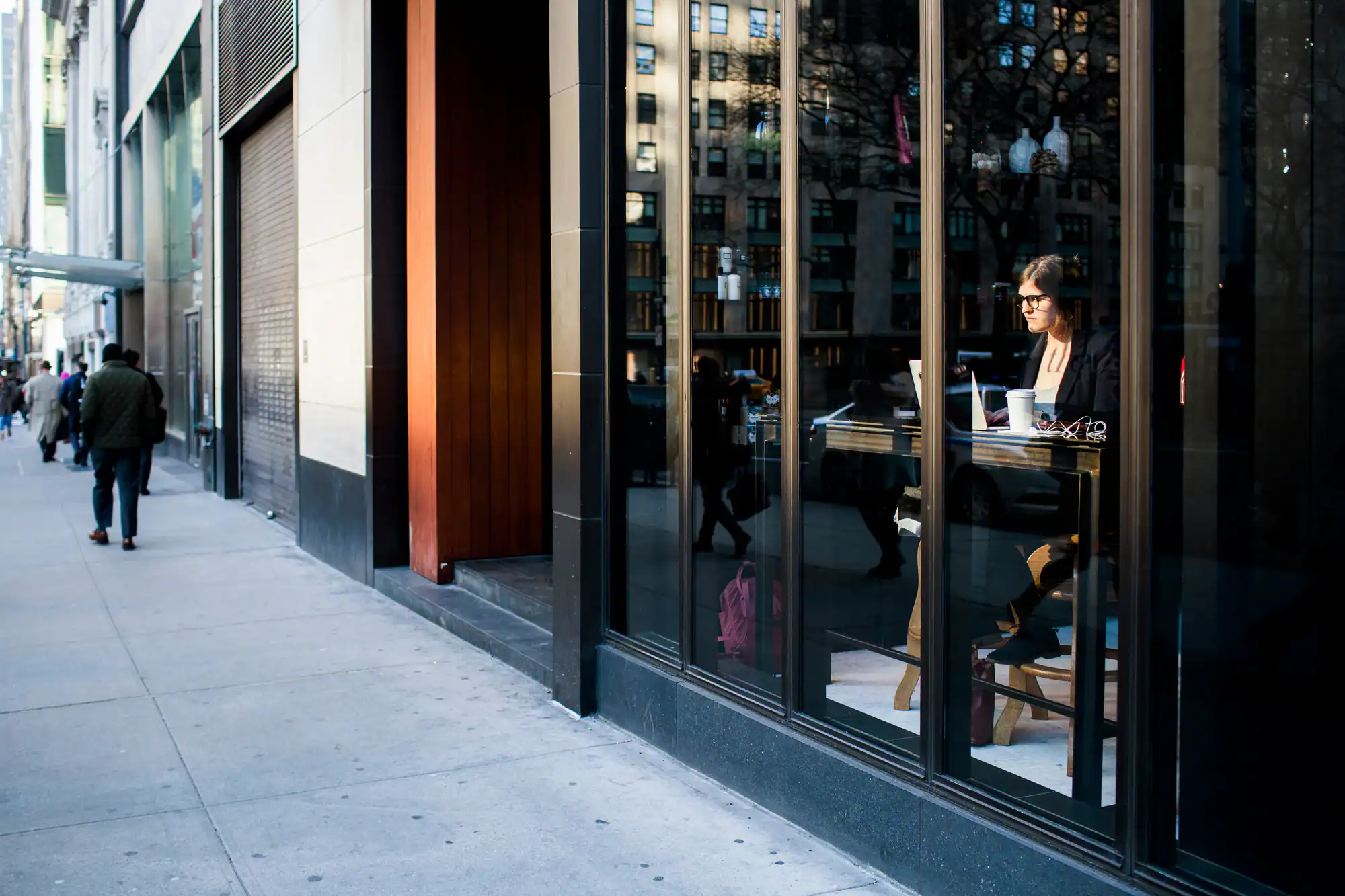
Let’s get specific about what you actually need to work effectively from a coffee shop—beyond the obvious stuff everyone already knows.
WiFi that works isn’t the same as WiFi that exists. You need speeds fast enough for video calls, file uploads, and multiple tabs without that spinning wheel of death. You need it to be reliable at 10 AM when everyone shows up and at 2 PM when the afternoon crowd arrives. Most importantly, you need to not think about it—because the second you’re troubleshooting your connection, you’ve lost 20 minutes of focus.
Power outlets matter, but their location matters more. A cafe with plenty of outlets that are all behind the counter or under tables you can’t access might as well have none. You need to be able to plug in without doing yoga poses or asking strangers to move. Your laptop battery says it lasts eight hours. It does not last eight hours.
Seating is where most places get it wrong. Bar stools work for 30 minutes, not for deep work sessions. You need back support. You need a table that’s the right height. You need enough space that you’re not elbow-to-elbow with someone else’s conference call. Comfortable seating isn’t about luxury—it’s about whether you can actually focus on your work instead of your lower back.
The noise level needs to hit a sweet spot. Too quiet and every keyboard click feels intrusive. Too loud and you can’t think. The best laptop-friendly cafes in NYC have enough ambient sound to mask individual conversations while staying quiet enough that you can take a call if needed. Music matters too—if you’re hearing the same playlist loop for the third time, that’s a problem.
Then there’s the vibe. Are other people working, or are you the only laptop in a sea of social meetups? Is the staff cool with you staying for a few hours, or do they start hovering after your first cup? Do you feel like you belong there, or like you’re imposing? These aren’t small details—they’re the difference between a productive day and abandoning ship after an hour.
Food and drink quality matters more than you’d think. You’re going to be here for hours. The coffee needs to be good enough that you actually want to order another one. The food needs to exist and be better than a sad muffin from three days ago. You’re not asking for Michelin stars—just options that don’t make you regret not packing a lunch.
Traditional coworking spaces charge $500 to $600 per month for a desk and WiFi. That’s real money—especially when you’re freelancing or running a startup or trying to make remote work actually work financially.
The math doesn’t add up for a lot of people. If you’re working from a coffee shop three days a week, spending $15-20 per visit on coffee and food, you’re looking at maybe $200-250 a month. You get the same WiFi, similar atmosphere, and you’re not locked into a membership you might not use every day. Plus you can switch locations based on your mood or schedule instead of commuting to the same desk every single time.
But it’s not just about money. Coworking spaces often feel like offices with better furniture—which is fine if that’s what you want, but defeats the purpose if you’re trying to escape office culture. The whole point of remote work for many people is flexibility and autonomy. Signing a lease for a desk starts to feel like you’re just recreating the thing you left.
Coffee shops offer something coworking spaces can’t: serendipity. You might sit next to someone working on something completely different from you. You might overhear a conversation that sparks an idea. You might just enjoy the fact that you’re not surrounded by the same faces every single day. That variety matters more than productivity gurus want to admit.
The rise of flexible work has created a massive market for coworking alternatives. People want professional workspaces without the commitment. They want community without mandatory networking events. They want to work hard for a few hours and then leave without feeling like they need to justify their existence to a membership coordinator.
We hit a sweet spot that traditional coworking can’t touch. You get the workspace functionality with cultural enrichment thrown in. You’re not just renting a desk—you’re working in an environment that was designed to stimulate creativity and make the workday feel less like a grind. For a fraction of the cost and zero commitment, that’s a pretty compelling offer.
The right workspace changes how you work. Not in some vague, motivational-poster way—in a measurable, noticeable, end-of-the-day-you-actually-finished-things way.
You don’t need another coffee shop. You need a place that understands what you’re trying to do and makes it easier instead of harder. A place where the WiFi works, the coffee’s good, and the atmosphere helps you think instead of just existing in the background. Where art on the walls reminds you that creating things matters. Where other people are focused on their own work, creating that productive energy that makes you want to match it.
That’s what we built at The Café Galerie . Not because the world needed another cafe, but because NYC’s creative professionals deserved a workspace that actually gets it. Come work here once and you’ll understand the difference between a place that allows laptops and a place that was designed for what you’re trying to accomplish.
Summary:
Share: