
Traditional event halls and art galleries serve different purposes when showcasing artwork. The right choice depends on your goals, budget, and what kind of experience you want to create for visitors.

You’ve got artwork ready to show. Now you need a space that actually does it justice.
The venue decision shapes how people experience the work, how long they stay, and whether they remember what they saw. Traditional event halls promise flexibility and capacity. Gallery spaces offer authenticity and atmosphere. Neither option is perfect, and choosing wrong can undermine months of preparation.
The real question isn’t which type of space is “better”—it’s which one aligns with what you’re actually trying to accomplish. Let’s start with what makes art exhibition venues different from standard event spaces.
Art exhibition venues are built around the artwork itself. Lighting systems are designed to highlight pieces without glare. Wall surfaces accommodate hanging systems. Sight lines matter. The space understands that people need room to step back, move closer, and view from angles.
Traditional event halls are built for gatherings. They prioritize capacity, catering access, and flexible layouts. The space works for weddings, corporate meetings, and fundraisers. Art can happen there, but it’s not what the room was designed for.
This distinction affects everything from how visitors move through the space to whether your exhibition feels like a cultural experience or a conference with paintings on the walls. In New York County, NY, where competition for attention is fierce, that difference matters.
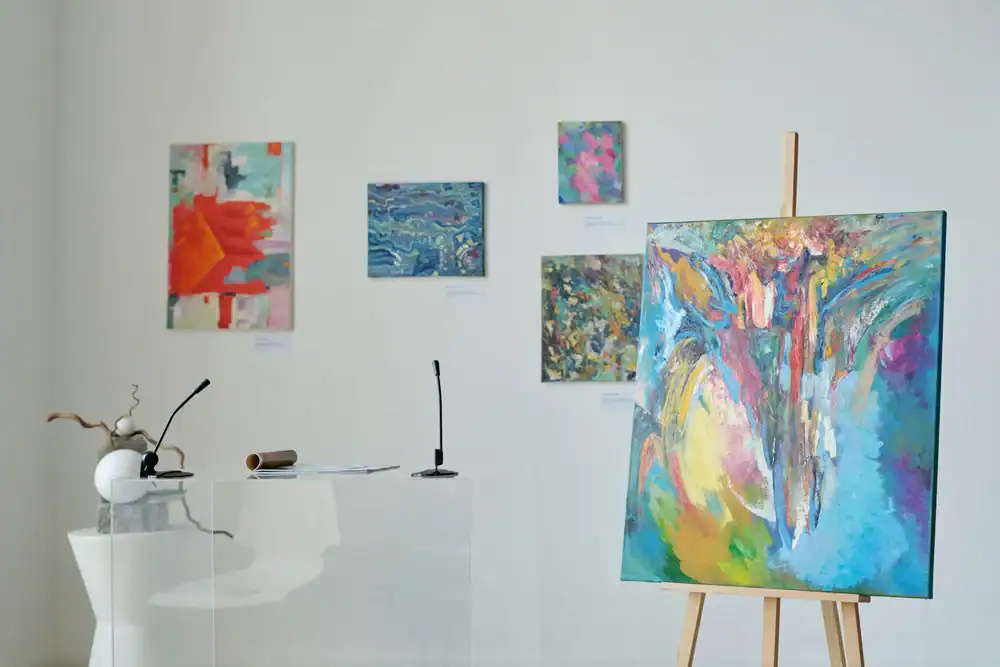
Lighting makes or breaks how artwork reads. Gallery spaces typically feature track lighting systems with adjustable fixtures that let you control intensity and direction. This matters when you’re showing pieces with texture, subtle color variations, or reflective surfaces.
Natural light is another consideration. Some gallery venues in Greenwich Village, NY feature large windows that flood spaces with daylight—ideal for certain types of work but problematic for light-sensitive pieces. The key is having control. Dimmers, blackout options, and layered lighting give you flexibility to adapt to different mediums.
Traditional event halls usually offer overhead fluorescent or basic ambient lighting designed for visibility, not presentation. You can bring in supplemental lighting, but that adds cost, setup time, and technical complexity. The space wasn’t designed with art in mind, so you’re working against the room instead of with it.
Wall surfaces matter too. Gallery spaces provide clean, neutral walls—usually white or light gray—that don’t compete with the artwork. Hanging systems are often built in, whether that’s track systems, picture rails, or walls designed to accept hardware without damage. Event halls may have patterned wallpaper, dark colors, or surfaces that make hanging difficult. You end up spending time and money solving problems that shouldn’t exist.
Walk into a traditional gallery and you immediately understand you’re in a space dedicated to art. The atmosphere signals that what’s on the walls deserves attention. Visitors adjust their behavior—they slow down, look more carefully, engage more thoughtfully.
Event halls don’t carry that cultural weight. The space feels transactional. People expect speeches, networking, or dinner service. Even when you’re showing exceptional work, the environment doesn’t reinforce that this is an art experience. You’re fighting the room’s identity.
This matters especially for emerging artists building credibility. Showing in a recognized art venue—even a small one—carries more weight than renting generic event space. Collectors, critics, and fellow artists read the venue as a signal about how seriously to take the work.
The hybrid model changes this equation. At The Café Galerie, we combine gallery environments with hospitality elements at our 168 Thompson Street location in Greenwich Village, NY. You get the cultural atmosphere of an art venue without the stuffiness that can make traditional galleries feel intimidating. Visitors can spend genuine time with artwork while having coffee, creating more relaxed engagement than rushed gallery visits.
We keep our space dynamic with rotating exhibitions. When artwork changes monthly, repeat visitors discover something new each time. That’s harder to achieve with traditional event halls where you’re renting for a single event and then moving on.
Want live answers?
Connect with a The Café Galerie expert for fast, friendly support.
Renting art gallery venue space in New York County, NY involves different considerations than booking a standard event hall. Location matters more because foot traffic and neighborhood context affect who shows up. Flexibility matters because exhibition needs differ from event needs. Cost structures work differently too.
Understanding what you’re actually paying for helps you evaluate whether a space makes sense for your specific situation. Not every artist needs the same type of venue, and not every exhibition benefits from the same features.

Art exhibition venues in established arts districts benefit from built-in audiences. Areas like Chelsea, SoHo, and Greenwich Village in New York County, NY attract people specifically looking for art experiences. Your exhibition competes for attention, but you’re reaching people already in the mindset to discover new work.
Traditional event halls in commercial or suburban areas may offer lower rental rates, but you’re starting from zero in terms of organic traffic. Every visitor needs to be specifically invited or marketed to. There’s no benefit from being part of a recognized arts corridor.
Thompson Street in Greenwich Village carries over 150 years of artistic heritage. When you show work in that neighborhood, you’re connecting to a cultural lineage that includes everyone from the Ashcan School painters to the Beat Generation to contemporary artists working today. That context adds meaning to the exhibition itself.
Accessibility matters too. Spaces near public transportation make it easier for people to attend. Ground-level venues with street-facing windows create visibility—passersby become potential visitors. Gallery spaces in Greenwich Village often feature these characteristics naturally, while event halls may be located in areas optimized for parking rather than pedestrian traffic.
Art gallery venue rental costs in New York County, NY typically range from $100 to $1,500 per hour depending on size, location, and amenities. Some spaces charge daily rates. Others offer multi-week exhibition periods. Understanding what’s included in that price matters as much as the number itself.
Traditional galleries may take commission on sales—often 40-60% of the purchase price—instead of or in addition to rental fees. This works if you’re selling high-value pieces but can be prohibitive for emerging artists with modest price points. Event halls typically charge flat rental fees with additional costs for equipment, staffing, and services.
The hybrid model offers different economics. Spaces that function as both café and gallery may have lower exhibition fees because they generate revenue from hospitality services. At The Café Galerie, we provide gallery atmosphere without traditional commission structures, making it more accessible for artists building their careers.
What’s included matters. Some venues provide lighting systems, hanging hardware, seating, and sound systems as part of the rental. Others charge separately for each element. Event halls often require you to bring in everything from pedestals to spotlights, turning a simple rental into a complex production with multiple vendors.
Transparent pricing helps you budget accurately. Hidden fees for setup time, breakdown, cleaning, or equipment damage can double your actual costs. Ask specific questions about what’s included, what’s optional, and what restrictions apply before committing to any space.
The right art exhibition venue depends on what you’re trying to accomplish. Traditional event halls work when you need large capacity and don’t require specialized art infrastructure. Gallery spaces work when atmosphere, credibility, and proper display capabilities matter more than raw square footage.
Hybrid venues offer middle ground—cultural authenticity combined with hospitality and flexibility. They work especially well for emerging artists who need professional presentation without traditional gallery barriers, and for events where you want people to actually spend time with the artwork instead of rushing through.
In Greenwich Village, NY and throughout New York County, options exist across the spectrum. The key is matching the space to your specific needs rather than choosing based on category alone. Consider your audience, your artwork’s requirements, your budget, and what kind of experience you want to create. We’ve built The Café Galerie to represent one approach to this challenge—combining gallery-quality exhibition space with coffee shop accessibility at 168 Thompson Street.
Summary:
Share: