We bring together specialty coffee and contemporary art in Manhattan's historic SoHo district, creating an accessible cultural experience beyond traditional galleries.
Walk into most Manhattan cafes and you know the drill. Order at the counter. Find a seat if you’re lucky. Stare at your laptop or phone. Leave when you’re done.
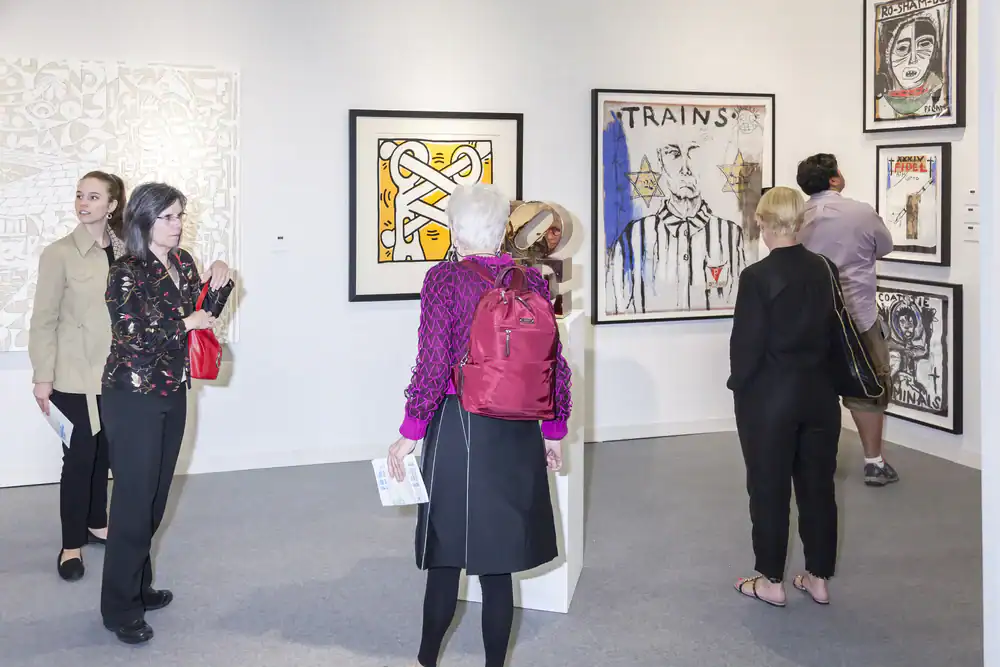
Art gallery cafes flip that script entirely. The space itself becomes part of the experience. You’re not just passing through—you’re entering a curated environment where contemporary art lives alongside the espresso machine.
The walls rotate with new exhibitions every few weeks or months. The artists are often local, sometimes emerging, occasionally established. You might discover a painter whose work resonates with you, have a conversation with them during an opening, and walk out with an original piece. That doesn’t happen at your average coffee shop.
Here’s the reality for most emerging artists in New York: traditional gallery representation is nearly impossible to secure. Gallery rents are astronomical. Getting your work seen requires connections, money, or both. The barrier to entry keeps talented artists on the sidelines.
Art gallery cafes democratize that process. We offer wall space to local creators, sometimes for free, sometimes with a small commission on sales. It’s a lifeline for artists who need visibility but can’t afford the traditional gallery system.
For you as a visitor, this creates an opportunity most people don’t realize exists. You’re seeing work before it hits the mainstream art market. Before prices skyrocket. Before the artist gets picked up by a major gallery. You’re getting in early, which matters if you care about collecting art that actually means something to you.
The model works because it’s symbiotic. The cafe gets rotating, conversation-starting artwork that makes the space memorable. The artist gets exposure to hundreds of potential buyers who are already in a relaxed, receptive mindset. And you get access to contemporary art without the intimidation factor of walking into a traditional gallery where someone immediately asks if they can help you.
This approach aligns with broader shifts in the art market. Collectors increasingly make decisions based on personal connection rather than waiting for institutions to validate their choices. They want to participate in an artist’s journey, especially at the most exciting stage when everything still feels possible.
Art gallery cafes facilitate exactly that kind of connection. You’re not viewing art in a sterile white cube with a gallerist hovering nearby. You’re sipping a cortado, maybe working on your laptop, and the art is just there—present but not precious. That accessibility changes everything about how people engage with contemporary art.
New York has a third space problem. You’re either at home or at work. Everything in between costs money or requires you to keep moving. Finding a place where you can simply exist—without an agenda, without a time limit, without feeling like you’re taking up someone else’s seat—has become surprisingly difficult.
Art gallery cafes fill that void. We design our spaces for lingering. The seating is comfortable. The lighting is intentional. The atmosphere encourages you to stay for a second cup, to actually look at the art on the walls, to have a conversation with the person next to you.
This matters more than it sounds. Since the pandemic, people have craved community and shared spaces. The number of venues dedicated to creative exploration in NYC has grown significantly. Many of these spaces aren’t centered on alcohol, reflecting shifting social preferences toward environments that prioritize connection over consumption.
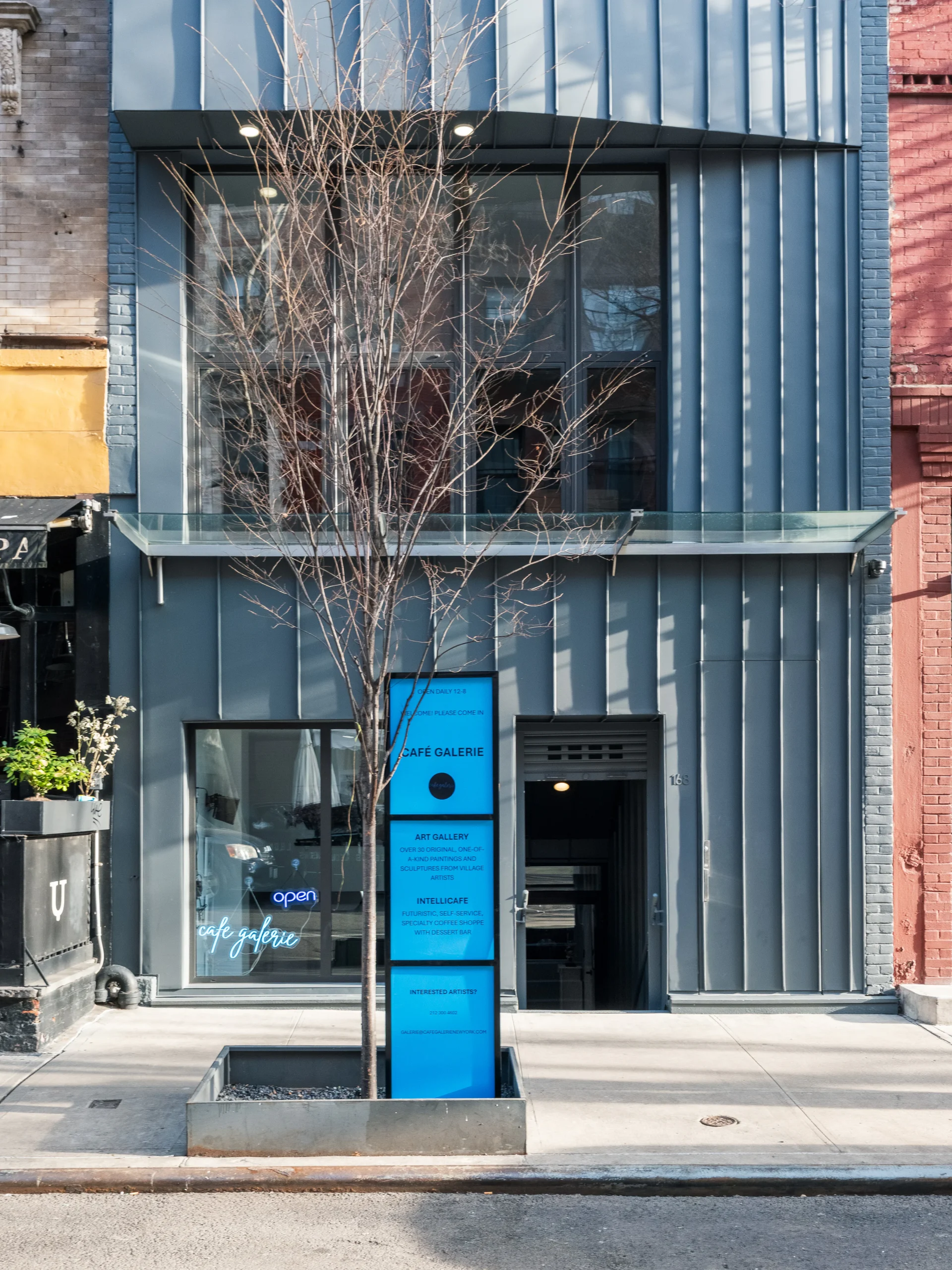
The Café Galerie at 168 Thompson St sits right in the middle of this trend. Located in SoHo—a neighborhood with artistic roots dating back to the 1850s—we honor that heritage while serving contemporary needs. You’re in a historic arts district that once drew pioneering artists to its loft spaces, and you’re experiencing a modern interpretation of that same creative energy.
What makes this work is authenticity. We don’t try to be everything to everyone. We’re specific. We know our audience: people who appreciate quality coffee, who value visual art, who want a space that feels real rather than manufactured. That specificity is what creates genuine community.
New Yorkers drink 6.7 times more coffee than people in any other US city. That’s not random. Coffee here isn’t just caffeine—it’s ritual, social currency, and survival mechanism all rolled into one. When you combine that with the city’s concentration of over 1,000 art galleries (the largest in the world), you get a natural intersection point. Art gallery cafes simply make that intersection explicit.
The best ones understand they’re not just selling coffee or showcasing art. We’re providing a third space where both can coexist naturally, where you can encounter creativity on a Tuesday morning without planning a museum visit, where the barrier between art and daily life dissolves completely.
Want live answers?
Connect with a The Café Galerie expert for fast, friendly support.
Manhattan’s art scene has always been decentralized. Yes, there are major museums and blue-chip galleries. But the most interesting work often happens in unexpected places—artist-run spaces, pop-ups, and increasingly, cafes that double as exhibition venues.
This shift reflects broader changes in how people discover and engage with art. Traditional gallery districts like Chelsea still matter, but they’re not the only game in town. SoHo, despite many galleries migrating elsewhere, retains its cultural cachet and artistic heritage. The neighborhood’s cast-iron architecture and historic significance create a backdrop that contemporary spaces like ours build upon.
When you explore art through coffee shop galleries, you’re getting a different perspective than you would at a traditional institution. The work tends to be more experimental. The price points are more accessible. The atmosphere is less intimidating. You can engage as much or as little as you want.
If you’ve never visited an art gallery cafe, you might wonder what actually happens there. Is it just coffee with some posters on the walls? Is the art any good? Will someone pressure you to buy something?
Here’s the reality: the best curated art spaces take their exhibitions as seriously as any gallery. We work with local curators, we host opening receptions, we rotate shows every 4-8 weeks. The art isn’t an afterthought—it’s central to our identity.
Contemporary art trends in 2026 favor work that shows the human hand. Collectors are gravitating toward pieces that feel unmistakably made—marked by intuition, risk, and imperfections. There’s a renewed emphasis on hand-made processes and repurposed materials. You’re seeing less algorithmic perfection and more visible humanity.
This plays perfectly into the art gallery cafe model. The work you’ll encounter tends to be tactile, personal, and emotionally resonant. It’s not trying to be the next Basquiat (though who knows). It’s trying to connect with you directly, without institutional mediation.
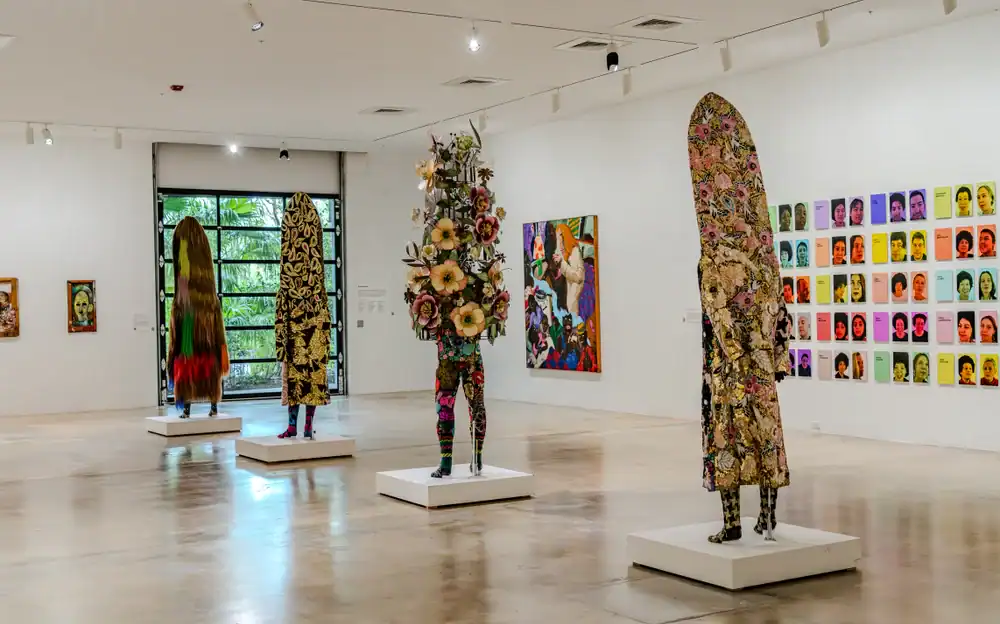
Rotating art exhibits might include paintings, photography, mixed media, small sculptures, or works on paper. The scale is typically appropriate for residential spaces, which is intentional—these are pieces you could actually live with. That makes the buying decision less abstract. You’re not imagining how a massive canvas would fit in your apartment. You’re seeing work at a scale that makes sense for most people’s lives.
The atmosphere during exhibition openings transforms the space completely. Artists are usually present. You can ask them about their process, their influences, what they were thinking when they made a particular piece. That direct connection changes how you see the work. It stops being just an object and becomes a conversation.
Between openings, the art remains on the walls as part of the daily experience. You might come in for coffee three times a week and gradually notice details you missed before. A color choice that suddenly makes sense. A composition that reveals something new. Art benefits from that kind of repeated viewing, and cafe settings facilitate it naturally.
The Café Galerie isn’t operating in isolation. Manhattan has seen a proliferation of spaces that blend coffee culture with visual arts, each with its own approach and aesthetic.
In Chinatown and Greenpoint, you’ll find Happy Medium, where the menu lists art mediums instead of food. You order experiences—paint-a-pot, watercolor, collage—alongside your drinks. It’s interactive rather than passive, appealing to people who want to create, not just consume.
Rhythm Zero in Greenpoint and the West Village takes a different approach. They feature rotating art and furniture (all for sale), creating an environment that changes regularly. Weekend seating has a laptop-free policy, encouraging people to actually engage with the space and each other rather than just camping out with screens.
Urbana Cafe and Gallery on 10th Avenue combines excellent coffee with rotating art exhibits and frequent art events. The community-focused atmosphere and friendly staff create a welcoming experience that regulars rave about.
Up in Hudson Yards, Enoch’s Arts & Coffee positions itself as a creative sanctuary where art, coffee, and community converge. They host exhibitions, events, and provide a space for corporate functions and private gatherings.
Each of these spaces proves the same point: there’s substantial demand for environments that don’t force you to choose between quality coffee and cultural engagement. People want both. They want them in the same place. And they’re willing to support businesses that deliver on that promise.
SoHo specifically offers advantages for this model. The neighborhood’s artistic heritage is embedded in its architecture and identity. Thompson Street runs through the heart of an area that has attracted artists and creative professionals for over 150 years. When you visit us at 168 Thompson St, you’re not just going to a coffee shop—you’re participating in a tradition that stretches back generations.
The location matters for practical reasons too. SoHo is walkable, well-connected by subway, and surrounded by other cultural attractions. You can easily combine a visit with gallery hopping, shopping, or exploring the neighborhood’s cast-iron architecture. It’s a destination neighborhood, which means people are already in the mindset to discover something new.
What unites all successful art gallery cafes is intentionality. We’re not trying to be everything. We know our identity. We curate carefully. We create spaces where art doesn’t feel precious or inaccessible—it feels like a natural part of daily life. That’s increasingly what people want from their cultural experiences.
Here’s what matters: you have options now. You don’t have to settle for corporate coffee shops that could exist anywhere. You don’t have to feel intimidated by traditional galleries that seem designed to keep casual visitors at arm’s length.
Art gallery cafes like ours prove that coffee culture and contemporary art can coexist naturally. We support emerging artists who need visibility. We provide third spaces where community forms organically. We make art accessible to people who might never set foot in a traditional gallery.
Manhattan’s concentration of galleries, artists, and coffee drinkers creates perfect conditions for this model to thrive. As more spaces embrace this hybrid approach, the city’s cultural landscape becomes richer and more democratic. Art stops being something you have to plan for and starts being something you encounter in your daily routine.
If you’re in SoHo or planning to visit, we offer exactly this kind of experience at 168 Thompson St. Quality coffee, rotating contemporary art exhibits, and an atmosphere that invites you to stay and actually pay attention to your surroundings. In a city that never stops moving, that’s worth something.
Summary:
Share: