
NoHo is one of the few neighborhoods in Manhattan where the person next to you at the counter might be a Cooper Union architecture student, a designer with a studio on Bond Street, or someone who knew this block before the boutiques arrived. That mix is rare. And the coffee shop it deserves should reflect it not just aesthetically, but in how it actually functions.
The biggest frustration with specialty coffee isn’t the price. It’s paying $7 for a latte that tastes completely different depending on who’s behind the machine that morning. We run precision self-serve equipment that holds optimal brewing temperature and pressure on every single cup. What you got on Monday is what you get on Thursday. That consistency isn’t an accident it’s engineered, the same way a good architect or designer approaches their own work.
Then there’s the space itself. NoHo’s loft buildings weren’t designed for people who sit still they were built for people who make things. If you’re working from your apartment on Lafayette or Great Jones and need somewhere that doesn’t kill your focus, our rotating exhibitions give you something worth looking at that changes every few weeks. It’s a workspace that actually moves with you, not one that looks the same every time you walk in.
We didn’t import a concept from somewhere else and plant it in NoHo because the rent made sense. Our whole model specialty coffee alongside rotating exhibitions by working NYC artists, with direct purchasing and no gallery commission was built around what this neighborhood already values. Art as part of daily life. Quality without gatekeeping. Local money staying local.
NoHo has the Robert Rauschenberg Foundation on Lafayette Street. It has Palo Gallery on Bond Street and Eric Firestone on Great Jones. It runs the NoHo Art Nexus, a neighborhood-wide event where restaurants, boutiques, and businesses display art because that’s just what this neighborhood does. We fit into that fabric because we were designed to not because we put some prints on the wall and called it a gallery.
The artists showing here are local. Our coffee meets the Specialty Coffee Association’s 80-point cupping standard. And we run without a corporate playbook telling us what to be.
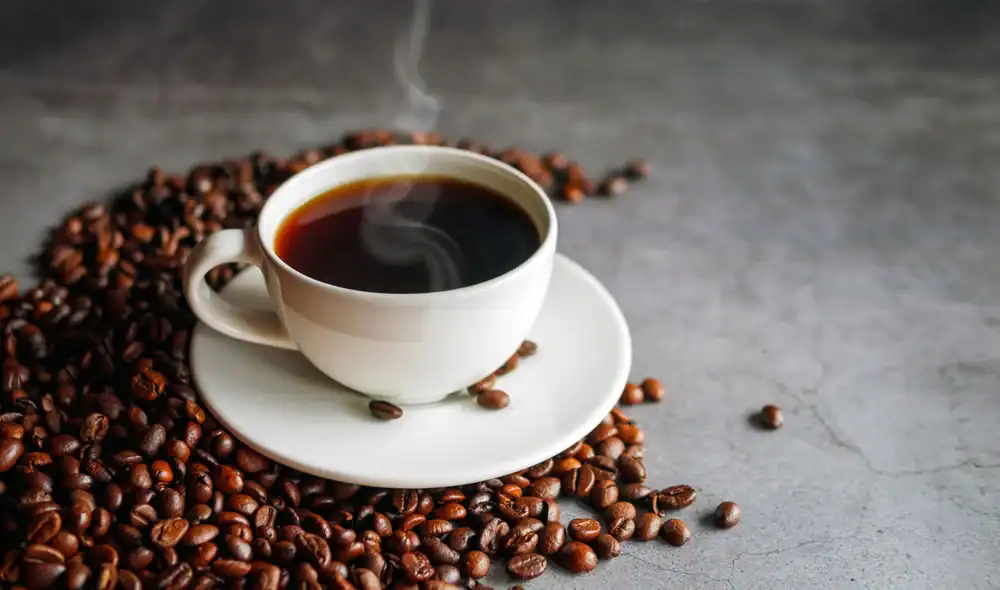
When you walk in, you’re in both a coffee bar and a working gallery. The art on our walls is from local NYC artists it rotates on a regular cycle, so the space you’re in today looks genuinely different from what it looked like a month ago. You can look at the work as long as you want. No one’s evaluating you as a buyer. No velvet rope, no sales pressure.
Ordering is straightforward. Our self-serve precision equipment means you’re not waiting on a line that moves at the speed of whoever’s training that week. You order, the machine does what it’s supposed to do, and you get a cup that hits the same standard every time whether that’s a flat white, a cortado, or a straight espresso pulled from specialty-grade beans. If you want to order ahead and pick up on your way from the Bleecker Street station, that works too.
We run evening events regularly they’re the moments when you can actually talk to the artists, ask questions about the work, and buy directly if something catches you. No gallery markup, no intermediary. The artist gets the full amount. For a neighborhood that has watched its own creative community get priced out over the decades, that part matters more than it might sound.
Ready to get started?
Our coffee qualifies as specialty-grade under the Specialty Coffee Association’s cupping protocol that means an 80-plus score out of 100, evaluated on aroma, flavor, acidity, body, and balance, with near-zero defects per batch. That’s not a label anyone can self-apply. It eliminates the majority of commercially grown coffee, including most of what you’ll find at chain outlets. In a neighborhood where people spend $2,294 per square foot on their apartments and eat at Il Buco, the baseline expectation for quality is already high. Our coffee is built to meet it.
Beyond espresso and milk-based drinks, we carry whole-bean coffee you can take home single-origin options sourced to the same specialty standard. If you’re the kind of person who has opinions about your home brewing setup, this is worth knowing. Our gourmet drink menu also goes beyond the standard latte-and-cappuccino range, with seasonal and specialty options that reflect what’s actually interesting in the category right now.
The art side of our space is fully integrated, not decorative. Works are available for direct purchase at every exhibition, with pricing set by the artist. There’s no gallery commission layer added on top. For NoHo residents who’ve always wanted to buy original work but found the Bond Street gallery circuit intimidating, this is the low-pressure version of that with a really good cup of coffee in hand while you decide.

The short answer is that no other coffee shop in NoHo is also a functioning art gallery with rotating exhibitions and direct-to-artist purchasing. La Colombe at 400 Lafayette is excellent and well-known. Gasoline Alley has deep neighborhood roots and a loyal following. Café Lyria on Crosby Street is a genuine hidden gem. But none of them give you a reason to walk in on a Thursday that you didn’t have on Monday and none of them put money directly into the hands of working local artists without a gallery commission in between.
We combine precision-brewed specialty coffee with a space that genuinely changes. The art rotates. Our evening events bring in the artists themselves. And our self-serve brewing equipment eliminates the inconsistency problem that frustrates even regular customers at otherwise good specialty cafés. We’re not trying to out-chain the chains or out-boutique the boutiques. We’re doing something that fits NoHo’s actual identity art and daily life sharing the same space, without pretension from either side.
It’s not a marketing term it’s a grading standard with real criteria behind it. The Specialty Coffee Association’s cupping protocol scores coffee on a 100-point scale across aroma, flavor, aftertaste, acidity, body, balance, and uniformity. To earn the specialty designation, a coffee has to score 80 or above and have fewer than five defects per 350 grams of milled beans. That standard filters out the vast majority of commercially grown product, including most of what major chains serve regardless of what they call it on the menu.
Our coffee meets that standard. Our brewing equipment is precision-calibrated to maintain optimal temperature and pressure on every cup, which means the specialty-grade beans are actually being extracted correctly not just purchased correctly and then brewed inconsistently. If you’ve had the experience of ordering a great espresso at a specialty café once and then getting something noticeably different on your next visit, that’s the barista-variability problem. Our equipment is designed specifically to eliminate it.
Yes and the process is a lot simpler than buying through a traditional gallery. The works on display are by local NYC artists, and they rotate on a regular cycle. Everything shown is available for direct purchase, with pricing set by the artist. There’s no gallery commission added on top, which means the price you pay is the price the artist receives in full.
For NoHo residents who’ve walked past Palo Gallery on Bond Street or Eric Firestone on Great Jones and felt the low-grade pressure of the traditional gallery floor, this is a different experience entirely. You’re already in the space for the coffee. You can look at the work as long as you want without anyone treating you as a prospective buyer to be managed. We run evening events regularly and bring the artists in directly those are the best moments to ask questions about the work, understand the context behind a piece, and make a purchase if something resonates. NoHo has always believed art belongs in daily life. This is just what that actually looks like in practice.
It’s built for exactly that. NoHo has a high concentration of people who work from loft apartments and studios designers, architects, creative directors, independent professionals and who need a third-place workspace that isn’t their home and isn’t a fluorescent-lit chain outlet. We have reliable WiFi, comfortable seating, and an atmosphere that’s been specifically designed not to produce the low-grade sensory flatness you get from a generic café with exposed brick and Edison bulbs.
Our rotating art is part of what makes it work as a workspace over time. If you’re coming in four or five days a week, the fact that the walls change every few weeks means the space doesn’t go stale the way a static café eventually does. For creative professionals especially, that matters the environment you’re working in affects how you think, and a space that’s visually alive tends to produce better sessions than one that’s been the same since it opened. Our order-ahead option also means you’re not burning 15 minutes in line before you can sit down and start.
NoHo is one of the most transit-connected neighborhoods in lower Manhattan, so getting here is straightforward from most directions. The Broadway–Lafayette Street and Bleecker Street station complex puts the 6, B, D, F, and M trains within easy walking distance that covers a wide range of Manhattan and outer-borough commutes. If you’re coming from the northern edge of the neighborhood near Cooper Square or Astor Place, the 6 train at Astor Place station is the most direct option. From the west side of the neighborhood near Broadway and 8th Street, the N, Q, R, and W trains at the 8th Street–NYU station work well.
If you’re walking from within NoHo itself from Bond Street, Great Jones, Lafayette, or the Bowery corridor you’re already close. The neighborhood is small enough that almost everything is within a few minutes on foot. For those arriving by bus, the M1, M2, M3, and M101 lines run along Lafayette Street and Broadway. Parking is limited, as it is throughout lower Manhattan, so transit or walking is the practical choice for most people.
We carry whole-bean coffee sourced to the same specialty-grade standard as what’s brewed in our bar which means you’re not buying a bag of beans that was graded separately from what goes into your cup. Single-origin options are available, and our staff can walk you through what works best for your home brewing method, whether that’s a pour-over, a French press, an AeroPress, or an espresso machine.
What to look for when buying specialty beans generally: roast date matters more than most people realize. Coffee is at its best in the two to four weeks after roasting, and most supermarket bags don’t tell you when the beans were roasted only when they expire, which can be a year or more after the fact. Buying from a specialty source like ours means you’re getting beans with a known roast date and a known origin, not a blend assembled for shelf stability. For NoHo residents who already have high standards for what they eat and drink and who are paying for apartments on the assumption that quality is available nearby this is the home coffee option that actually matches that standard.
Other Services we provide in Noho